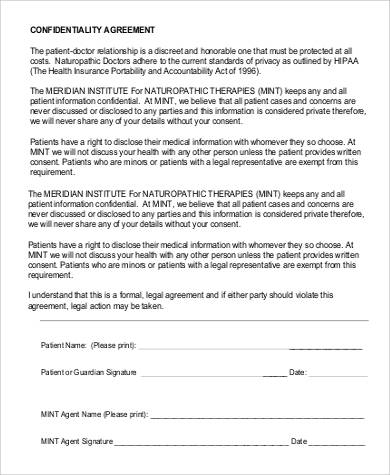
% Confidentiality Information about customers is confidential and never disclosed to third parties. Original Writing We complete all papers from scratch. Our writers can complete a standard essay for you within hours and a part of a dissertation – in days. High Quality Here is an example of the type of e-mail I was sending in April You may sense the frustration (I have changed the names of the unit and wards for confidentiality reasons). I think this is very simple, Unit A is currently ‘hot’. We have five patients and four staff ‘COVID positive’ swabbed. Eight patients have now died of COVID Under the Constitution, all citizens enjoy certain rights, and – as a doctor – you have a responsibility to ensure that those rights are respected; patients also have responsibilities, which are set out in the Patient’s Charter. The Patient’s Charter is an explicit statement of the rights and responsibilities implied by the Constitution
Patient Rights And Ethics - StatPearls - NCBI Bookshelf
And so, after only thirty short years of research, my book on heart disease is finally finished, and is published today. Up to now my books, and blogs, have mainly consisted of telling people what does not cause heart disease. Or to be slightly more accurate, cardiovascular disease. So, what does cause cardiovascular disease?
Those few, those happy few, who have read this blog over the years may already know a great deal of what is in the book. For others this will be a new and, hopefully, fascinating foray into a completely different way of thinking. Instead, there are many. They can work by themselves or combine with others. This is not purely semantics. Whilst the difference may seem subtle, it is critical.
A table, or the table. A man, or the man. An answer, or the answer. It means that many different things, or factors, or whatever term you use to describe them, can lead to exactly the same disease. You may then ask; can they all be described as causes? Boy, oh boy, it all gets very complicated. I have found that the language used here has become perhaps the greatest barrier to understanding. So, how can they all be fitted together into a unified theory? The current position is simply to state that cardiovascular disease is multifactorial.
No need to think beyond that. Just find the important risk factors, then deal with each one separately. This works up to a point. Stop smoking, keep the blood pressure down, control diabetes and the risks will fall. No need to look further. Move on, nothing to see here. Many years ago, the French mathematician and science philosopher Henri Doctor patient confidentiality essay stated the following, which I find describes the situation almost perfectly.
But a collection of facts is no more a science than a heap of stones is a house. There is no structure, no understanding, no hypothesis. Below, for example, is a list of factors that are closely associated with an increased risk of cardiovascular disease.
You input your personal data e. In truth, not that accurately. It is true that all these things are associated with an increased risk of cardiovascular disease, in the UK, at present. However, to create a coherent hypothesis, you have to explain how they fit together, doctor patient confidentiality essay. Then explain how they both lead to exactly the same disease. Or diabetes and severe mental illness. Or ethnicity and chronic kidney disease. Someone, anyone.
Good luck. It is only very indirectly related to the low-density lipoprotein level, if at all. Moving on, the more I studied cardiovascular disease, the more I became aware of an inescapable fact. Which doctor patient confidentiality essay that, in order to claim that I understood it, I had to establish how such very disparate factors can all lead to exactly the same disease. This, in turn, doctor patient confidentiality essay, meant giving up on the causal model.
What I had to do, doctor patient confidentiality essay, as pointed out to me by the late, great, Doctor patient confidentiality essay Rosch, was to turn my attention to the disease process. As in, what is actually going on? What is cardiovascular disease? What are we looking at? There is a great deal of information to be covered.
Most of which is described, in some detail, in the book. However, just to give you a couple of thoughts to consider. All blood vessels are lined by cells called endothelial cells. These cells, and indeed all cells in the body, have enormously complex mechanisms in place to regulate what gets into them, and what can then escape from them.
This regulation can control the movement of the largest molecule, down to the very smallest. Including tight control of the entrance, doctor patient confidentiality essay, and exit, of single atoms e. In short, nothing can gain entry doctor patient confidentiality essay a cell unless the cell grants entry. Nothing [Unless you are a virus e. For anything to gain entry, the cell must open a channel of some sort i.
Or it has to manufacture a receptor. The receptor will then lock onto the substance floating in the bloodstream and drag it through the cell membrane and into the cell. Just to pluck an example from the air. In order to get low-density lipoprotein into a cell, the cell must first synthesize a low-density lipoprotein LDL receptor.
It then transports the receptor to the cell membrane. Without this machinery getting to work, there is no way to get LDL into a cell. Just to repeat this, from a slightly different direction. An LDL molecule is massive in comparison to an ion.
Think rowing boat vs. super tanker. Yet, if we are to accept the LDL hypothesis, we are supposed to believe that cell membranes simply step aside, or part like the red sea, to wave through a super-tanker sized molecule. It all gets more unlikely, doctor patient confidentiality essay.
The cell must then allow the LDL molecule to propel itself from one cell membrane to the other. A very clever trick for an inanimate molecule, with no means of propulsion. Looked at from doctor patient confidentiality essay human scale, if I were an LDL molecule, a cell would be about half a mile across. Even if the LDL managed this, once it reached the other side of the cell, the LDL would need to pop back out of the cell and into the artery wall behind — using an inside-out LDL receptor perhaps?
Some people have therefore suggested the LDL molecules simply sneak between endothelial cells. But this, too, is impossible. Endothelial cells are tightly bound to each other, with a whole series of protein bridges a. Which means that nothing can get from the blood and into the artery wall though a side entrance doctor patient confidentiality essay. Just to give you one example of what happens if you loosen the tight junctions between cells, we can look at the Ebola virus, doctor patient confidentiality essay.
This virus opens up the tight junctions between endothelial cells. At which point the endothelial barrier function is critically compromised, and blood can now escape into the tissues, and organs. This leakage is the reason why Ebola is also known as a form of haemorrhagic fever. Blood appears in the cornea, so your eyes become bloodshot. You cough up the blood that that has escaped into your lungs.
Your tongue falls off. Your urine is filled with blood from your kidneys, your bowel motions turn black, and then…. Bang, dead, from massive fluid loss and vascular collapse. Ebola demonstrates very clearly the critical importance of tight junctions between cells.
Open them up… and you die. How did you think Ebola actually kills you? I imagine that you, like me, before I started looking at this area in detail, probably never really thought much about it. You just vowed never to catch it:. Anyway, forgetting about that for the moment. Let me take you back to think about an alternative process model. To ask, so what is the disease process that allows you link smoking to, say, systemic lupus erythematosus?
Because both things are most certainly causal. And what of the doctor patient confidentiality essay, many, other factors, not mentioned in Qrisk3? This is a very long list indeed. I could go on… for a few pages.
The harder you look, the more stones you unearth. In the end Doctor patient confidentiality essay had this massive pile of stones which became my two-thousand-piece jigsaw puzzle — just to change metaphors abruptly.
Confidentiality - CRASH! Medical Review Series
, time: 16:34Essay Fountain - Custom Essay Writing Service - 24/7 Professional Care about Your Writing
Under the Constitution, all citizens enjoy certain rights, and – as a doctor – you have a responsibility to ensure that those rights are respected; patients also have responsibilities, which are set out in the Patient’s Charter. The Patient’s Charter is an explicit statement of the rights and responsibilities implied by the Constitution Aug 25, · Doctor's Response: The same rules of doctor-patient confidentiality apply to autopsy examinations as to medical records of living patients. This means that doctors are not allowed to reveal the results of an autopsy examination to third parties without the permission of the next-of-kin of the deceased. Photo Essay. A heart attack is a Here is an example of the type of e-mail I was sending in April You may sense the frustration (I have changed the names of the unit and wards for confidentiality reasons). I think this is very simple, Unit A is currently ‘hot’. We have five patients and four staff ‘COVID positive’ swabbed. Eight patients have now died of COVID

No comments:
Post a Comment